
- Gravity feed (G22): a 1/3 oz cup on top feeds a 0.3 mm tip. Best for detail, small batches and low-pressure spraying.
- Siphon feed (S68): a 3/4 oz bottle below feeds a 0.35 mm tip. Best for larger jobs and fast color swaps by changing jars.
- Both are dual-action, so one trigger controls air and paint.
- Want both? The SB84 accepts a gravity cup or a siphon bottle, and several kits include a G22 and an S68 together.
The gravity feed vs siphon feed airbrush question comes down to where the paint sits. A gravity airbrush holds paint in a cup above the nozzle, so it flows down on its own. A siphon airbrush pulls paint up from a bottle below, using the airflow to draw it into the tip.
To keep it concrete, this comparison uses two Master Airbrush models: the G22 gravity airbrush and the S68 siphon airbrush. Every spec is taken from the maker's listings. For more gravity options, see the best gravity feed airbrush roundup.
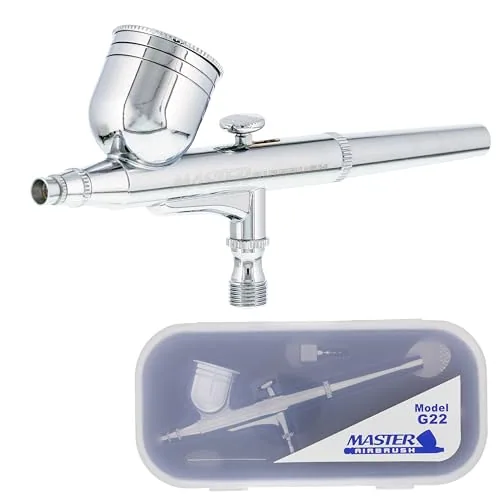
Master Airbrush G22 Multi-Purpose Dual-Action Gravity Feed Airbrush Gun
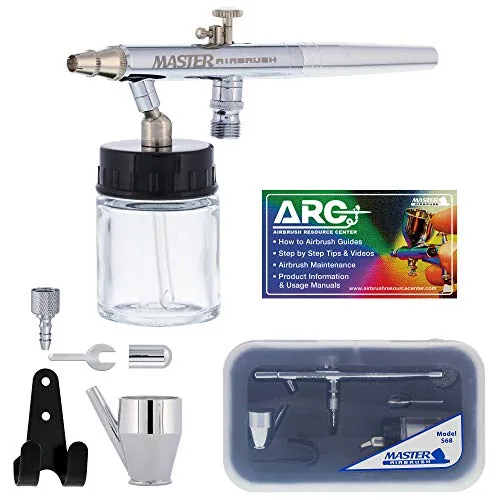
Master Airbrush S68 Precision Dual-Action Siphon Feed Airbrush Gun
Gravity feed vs siphon feed airbrush: how each works
Gravity feed
Paint sits in a cup on top of the airbrush. Gravity pulls it to the nozzle, so even a small amount reaches the tip and little is left behind. Because the airbrush does not have to lift the paint, it can spray at lower air pressure, which helps with fine lines.
Siphon feed
Paint sits in a jar or bottle under the airbrush. Air rushing past the tip creates suction that draws paint up a tube. Bottles hold more paint, and you can keep several pre-mixed colors in spare jars and screw them on as needed.
Master Airbrush G22 Multi-Purpose Dual-Action Gravity Feed Airbrush Gun
Check price →Master Airbrush S68 Precision Dual-Action Siphon Feed Airbrush Gun
Check price →G22 vs S68 specs side by side
| Spec | G22 (gravity) | S68 (siphon) |
|---|---|---|
| Feed type | Gravity, top cup | Siphon, bottom bottle |
| Action | Dual-action | Dual-action |
| Tip size | 0.3 mm | 0.35 mm |
| Paint container | 1/3 oz gravity cup | 3/4 oz bottle, plus color cup |
| Spray range | Hairline to 1-1/2 in background | ~ Detail to general coverage, width not stated |
| Listed uses | Hobbies, crafts, auto graphics, tattoos, cake, fine art, nail art | Automotive, art, hobbies, cake, illustration |
| Fine detail | ✓ Strong point | ~ Possible, larger tip |
| Large areas | ~ Frequent refills | ✓ More paint per fill |
Paint capacity per fill
Fluid ounces, from each listing
On paper, the S68 holds a bit over twice as much paint per fill. The G22 has the slightly finer tip, 0.3 mm against 0.35 mm.
Which is better for detail work?
Gravity feed usually wins for detail. The paint is already at the tip, so you can work with a few drops at low pressure, and the G22's listing names hairline detail spray among its uses.
Siphon guns can do detail too, and the S68 listing describes smooth and detailed results. In practice the bottle adds weight below the gun and needs enough airflow to lift the paint. That suits steady coverage more than tight lines.
For figures and scale models, read our best airbrush for miniatures guide, which covers 0.2 mm options such as the G45 and G344.
Which is better for big jobs and color changes?
Siphon feed has the edge on volume. A 3/4 oz bottle covers more surface before you stop to refill, and spare jars let you keep colors mixed and ready.
Master Airbrush sells a 10-pack of empty 3/4 oz (22 cc) TB-001 glass jars with lids. The listing says their standard thread screws into most plastic-topped siphon lid assemblies that take 3/4 oz jars.
Gravity users change colors by flushing the cup, which is quick with a small cup. A cleaning pot like the TP-50 traps the overspray while you flush.
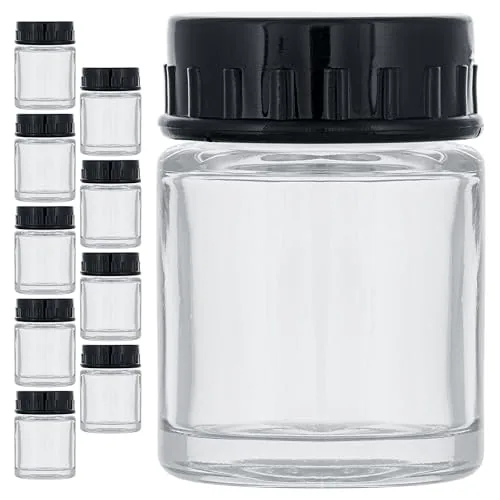
Master Airbrush Pack of 10
Check price →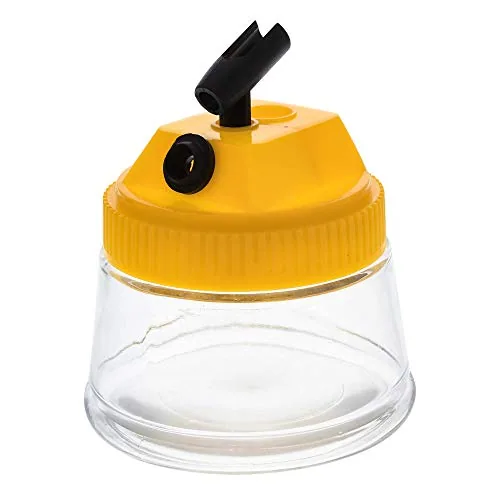
Master Airbrush 3-in-1 Cleaning Pot with Holder
Check price →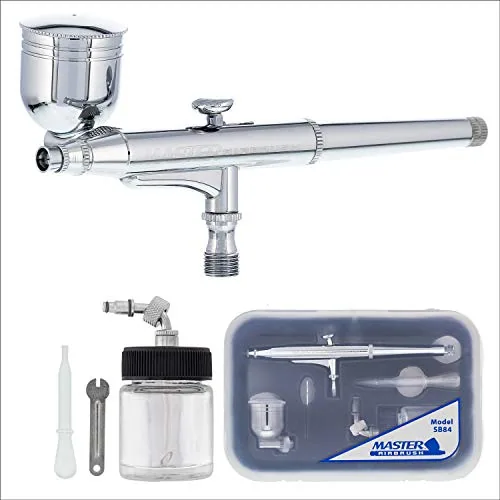
Master Airbrush SB84 Multi-Purpose Dual-Action Side Bowl Feed Air Brush Kit
Check price →Cleaning and upkeep: which is easier?
Cleaning is an overlooked part of the gravity feed vs siphon feed airbrush decision. With a gravity gun, you wipe out the cup, add cleaner and spray it through. There is no pickup tube to clear.
A siphon setup adds a few parts: the bottle, the lid assembly and the tube that dips into the paint. Each one needs rinsing, but you can also cap a bottle and store leftover paint instead of washing it out.
- Gravity: fewer parts, less paint left over, quick flush between colors.
- Siphon: more parts to rinse, but mixed paint can be capped and saved.
- Both: brushes and needles sized for tips and air caps, like the 11-piece SG-209 set, make the job faster.
Browse cleaning and accessories for pots, brushes and spare jars.
How to choose between gravity and siphon feed
- Think about surface size. Small parts, nails and illustration favor gravity. Car panels, cakes and shirts favor siphon.
- Think about paint volume. A few drops per color points to a cup; an ounce of one color points to a bottle.
- Check your compressor. Siphon feed relies on airflow to lift paint, so a steady air supply matters. See the best airbrush compressor guide.
- Consider a kit with both. The 1/4 HP twin-piston kit lists a G22, an S68 and a single-action E91 siphon airbrush. The TC-426 kit lists three airbrushes, gravity and siphon feed.
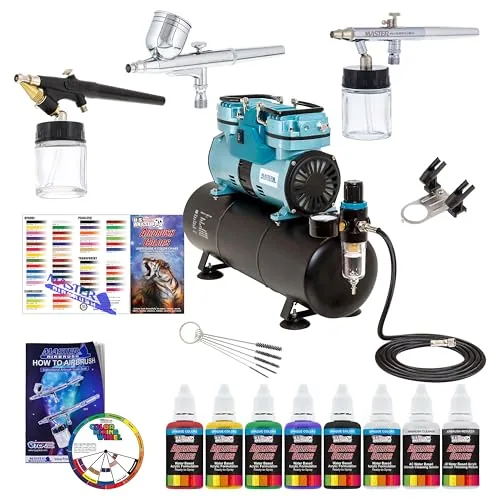
Master Airbrush 1/4 HP Twin Cylinder Airbrush Kit with Cool Running Air
Check price →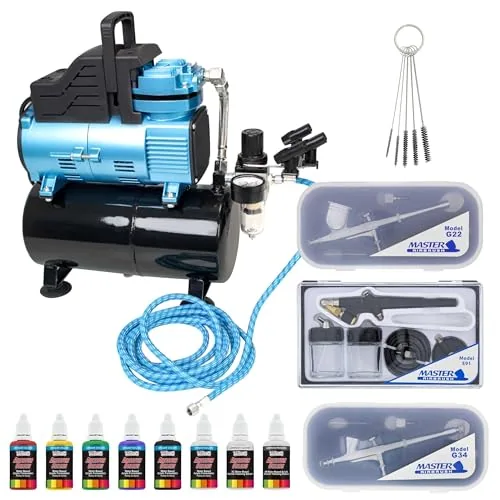
Master Airbrush Cool Runner Dual Fan Air Compressor with Storage Tank
Check price →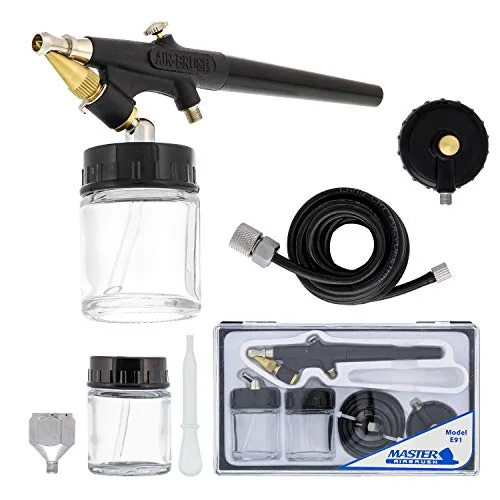
Master Airbrush E91 Airbrush Set Single-Action External Mix Siphon Feed
Check price →The E91 is a single-action, external mix siphon airbrush with a 0.8 mm tip and broad spray, aimed at beginners and general coverage. Browse all airbrushes, airbrush kits and hoses and fittings, or start with the best airbrush kit for beginners.
In the gravity feed vs siphon feed airbrush choice, the job decides it. The G22 gravity airbrush, with its 0.3 mm tip and 1/3 oz cup, suits detail, small batches and low-pressure work such as models, nails and fine art. The S68 siphon airbrush, with a 0.35 mm tip and 3/4 oz bottle, suits larger surfaces and quick color swaps from pre-filled jars.
If you do both, the convertible SB84 or a kit with both feed types avoids the trade-off. Pair either airbrush with clean, dry air; our best airbrush accessories guide and the Cool Runner II review cover the rest of the setup.
FAQ
What is the difference in a gravity feed vs siphon feed airbrush?
A gravity airbrush holds paint in a cup on top and lets it flow down. A siphon airbrush draws paint up from a bottle below using airflow.
Is gravity feed better for beginners?
Many beginners find gravity feed easier for detail and cleanup because it uses little paint. The G22 listing describes it for beginners and students as well as advanced artists.
Does siphon feed need more air pressure?
Generally yes. The airflow has to lift paint from the bottle, while gravity does part of the work in a top-cup airbrush.
Can one airbrush do both gravity and siphon feed?
Yes. The Master Airbrush SB84 ships with a 1/3 oz gravity cup and a 3/4 oz siphon bottle and runs as either.
What size jars fit a siphon feed airbrush?
Many siphon lid assemblies take 3/4 oz jars. The TB-001 jars are 3/4 oz (22 cc) with a thread the listing calls industry standard.
Which is better for cake decorating?
Both list cake decorating. Siphon feed suits covering large cakes in one color; gravity feed suits fine details and small accents.